A guy once came into the Nashville fitting room wearing a bulky hoodie under an enormous coat. He was warm, technically, but he looked swallowed by three layers and could barely move his arms. His question was simple: what should male winter wear actually do? The answer is also simple. It should keep you comfortable, fit over the layers you really wear, and work for more than one Saturday trip to the hardware store. Fit first. The rest is noise.
Start with the layer you wear most
The foundation of good male winter wear is not the coat. It is the layer closest to your body. A cotton T-shirt works indoors, but a merino wool or synthetic-blend undershirt handles sweat better when you move between a cold parking lot and a heated office. Look for a close fit across the chest without fabric pulling at the buttons or riding up when you sit.
For most men, a long-sleeve thermal in the $20 to $50 range does the job. Uniqlo Heattech, Smartwool, and budget outdoor brands all offer useful options at different prices. You do not need a full drawer of them. Two or three neutral colors will cover workdays, school drop-offs, and weekend errands.
The middle layer supplies warmth. A flannel shirt, merino crewneck, fleece quarter-zip, or lightweight quilted vest gives you insulation without making your coat feel like a sleeping bag. This is where male winter wear gets easier: each layer should work alone, but also leave enough room for the next one.
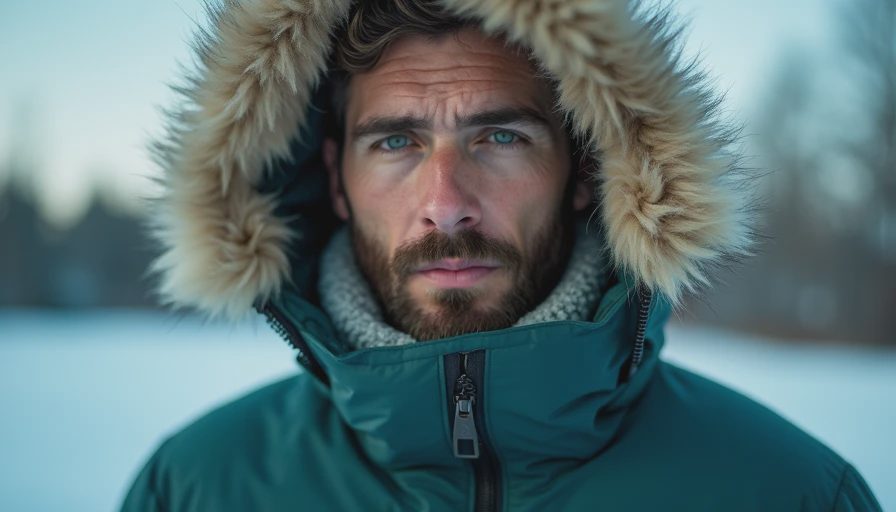
Choose a coat for your actual schedule
The best outer layer depends on what cold means in your life. If you drive to work, walk only from the parking lot, and spend most of the day indoors, a wool-blend topcoat or insulated jacket is probably enough. If you stand beside a soccer field, walk a dog before sunrise, or work outside, you need more coverage and better protection from wind and rain.
A versatile coat should close comfortably over a sweater. When trying one on, wear the thickest middle layer you expect to use. Zip or button it, reach forward as if gripping a steering wheel, and raise both arms. If the shoulders strain or the hem rides sharply upward, size or cut is wrong. Do not assume a bigger size will solve everything; it often creates loose sleeves and a shapeless body.
For daily use, consider a simple insulated jacket from brands such as Columbia, Lands End, Patagonia, or Eddie Bauer. A decent option commonly costs $100 to $250, while a wool coat from J.Crew, Banana Republic, or a similar retailer often lands between $150 and $350 during seasonal sales. The expensive option is not automatically warmer. Construction, fit, and the weather you face matter more.
Get the proportions right
Fit is where most male winter wear goes wrong. Men often buy a coat too large because they are thinking about layering, then compensate by tightening a drawstring or wearing a scarf like a curtain. You want room to move, not acres of extra fabric.
The shoulder seam should sit close to the edge of your shoulder. The sleeve should reach the wrist bone when your arms hang naturally, with enough length to cover the cuff of a shirt. A casual jacket usually looks balanced around the hip, while a dressier overcoat can reach the mid-thigh. If you have a longer torso, a coat with a little extra length creates better balance. If you are shorter, avoid an oversized coat that ends near the knee.
A useful test is to take a photo from the side. It shows problems a mirror hides, especially a coat that bulges at the lower back or pulls across the seat. I have seen this on hundreds of men, and the fix is usually not losing weight or buying a premium label. It is choosing a cut that matches the body you have.
Build around two dependable outfits
You do not need a complicated winter wardrobe. Start with two combinations that cover most of your week. For work, try dark jeans or chinos, an Oxford shirt, a crewneck sweater, and a wool-blend coat. For weekends, use straight-leg jeans, a thermal shirt, a flannel overshirt, and an insulated jacket.
Male winter wear looks more intentional when the colors cooperate. Navy, charcoal, olive, camel, brown, and dark denim are easy to combine. If your coat is black, add texture through a gray sweater or a patterned scarf rather than buying another black layer. A small amount of contrast helps you look dressed without looking like you spent an hour planning it.
Avoid stacking multiple thick items that fight for space. A heavy hoodie under a bulky flannel under a padded jacket can make even a well-fitted man appear wider and shorter. Choose one substantial layer and keep the others lighter. This reduces bulk while preserving warmth.

Do not ignore your feet and hands
Cold-weather outfits fail quickly when the accessories are an afterthought. Leather or waterproof boots with a rubber sole handle ordinary winter sidewalks better than smooth dress shoes. Thursday Boot Company, Blundstone, Red Wing, and DSW house brands offer practical choices across a broad price range. Look for a sole with visible traction and enough room for a wool sock.
A boot should hold your heel without pinching your toes. Try it on late in the day, when feet are slightly larger, and wear the socks you plan to use. If your toes touch the front while walking downhill, the boot is too short. If your heel lifts dramatically, try another size or shape rather than hoping it will break in.
Gloves should let you grip a steering wheel, phone, or coffee cup. Leather gloves look polished, while fleece-lined synthetic gloves are often warmer for errands and outdoor chores. A wool or cashmere-blend beanie can add warmth without the oversized look of a ski cap. These small pieces complete male winter wear because they solve actual problems instead of merely adding decoration.
Spend money where you feel it
A sensible budget for male winter wear might be $40 to $80 for a sweater, $100 to $250 for an everyday jacket, $100 to $220 for reliable boots, and $20 to $60 for accessories. You can spend less during January sales, outlet promotions, and end-of-season clearance. Prioritize the coat and footwear first because they handle weather, wear, and daily abuse.
Save money by buying interchangeable colors and maintaining what you own. Brush salt from boots before it dries, wash wool according to the care label, and hang coats on broad shoulders rather than a thin wire hanger. A $180 coat that lasts five years is a better buy than a $90 coat that looks tired after one season.
When shopping online, measure a coat you already like and compare its chest, sleeve, and back length with the product chart. Brand sizing is inconsistent. A medium in one label can fit like a large in another, and a relaxed cut can add several inches through the body. Reviews are useful when they describe height, build, and the layers worn underneath.
A quick fitting-room checklist
Before buying, put on the coat with your real winter base layer. Check the shoulders, close every fastener, sit down, and reach forward. Make sure the collar protects your neck without rubbing, the pockets are usable, and the zipper moves without catching the lining. Walk outside if the store allows it, because warmth and movement are easier to judge away from bright fitting-room lights.
For male winter wear that earns its place, ask whether each piece solves a specific problem: cold, rain, wind, commuting, or looking presentable at dinner. If it does two or three jobs, it is probably a smart purchase. If it only works with one outfit, wait before spending the money.
The goal is not to become interested in fashion. It is to leave the house warm, comfortable, and reasonably put together without negotiating with your closet. Buy fewer pieces, get the proportions right, and choose layers that fit your actual week. Fit first. The rest is noise.



No letters yet — pray write the first.