A man once came into the fitting room complaining that every jacket made him look stiff. He demonstrated the problem by walking three steps, swinging his arms like he was carrying invisible grocery bags. The issue was not his posture. His jacket was too narrow through the shoulders and too long in the sleeves. If you have searched “men's jacket changes walk,” you are probably noticing the same kind of restriction: a coat that makes a normal stride feel mechanical.
That discomfort is useful information. A jacket should move with your body, not turn a trip to the mailbox into a low-budget reenactment of a soldier’s march. Here is how to identify the problem, what to measure, and which affordable changes actually help.
Why a jacket can change your walk
The most common cause is tension across the upper back. When the shoulder seams sit too far inward, the jacket pulls whenever your arms move forward. Your body responds by keeping your elbows closer to your ribs, shortening your stride, or rolling your shoulders forward. That is the physical reason a men's jacket changes walk for so many men.
A second issue is a tight chest or button stance. Stand naturally and button the jacket. If the fabric forms sharp horizontal lines from the button toward your sides, the coat is working too hard. You may unconsciously lean back to create space. A jacket that is too snug at the waist can produce the same compensation, especially when you sit, climb stairs, or reach for a steering wheel.
Sleeve length also matters. Sleeves that cover part of your hands can make your arms feel weighted down. Sleeves that stop above the wrist encourage you to hold your hands unnaturally, as though you are trying not to touch anything. Neither problem requires a new wardrobe. It requires a better fit diagnosis.
The three-minute movement test
Do not judge a jacket only while standing in front of a mirror. A fitting room is not a museum display; you need to test the garment as you actually live in it. Put on the shirt or sweater you would normally wear underneath, then fasten the jacket with the top button or main closure.
First, raise both arms to shoulder height. You should feel some resistance, but not a hard pull across your back. Next, reach forward as if you are typing, loading a child’s car seat, or grabbing a coffee from the center console. If the jacket climbs dramatically or the collar lifts away from your neck, the upper body is too tight or the armholes are poorly positioned.
Then walk at your normal pace for 30 seconds. Do not perform a dramatic runway turn; just walk like you are late to pick up a prescription. If you find yourself taking shorter steps, keeping your arms stiff, or repeatedly tugging the hem, the men's jacket changes walk problem is real. Try the same movement with the jacket open. If everything improves immediately, the front or waist is likely too tight.
Shoulder fit comes before everything else
You can shorten sleeves, adjust buttons, and sometimes let out a little fabric at the waist. You cannot easily rebuild a badly shaped shoulder. The seam should end close to the point where your shoulder naturally ends, not halfway down your upper arm and not several inches before it. The shoulder line should look clean without a ridge, divot, or bulge.
This is where men often buy the wrong size. A large man may size up to get room in the chest, leaving the shoulders too broad. A muscular man may size down for a sharper waist and create tension across the back. A man with a fuller midsection may need a classic cut rather than a slim cut, even if the tag suggests the same numeric size.
Try brands with different blocks instead of assuming your usual size is the answer. J.Crew, Bonobos, SuitSupply, and department-store house brands all shape jackets differently. You might be a 42 Regular in one label and a 44 Short in another. The tag is information, not a personality test.
Length and jacket weight affect your stride
A jacket that ends too low can catch against your thighs as you walk. This is especially noticeable in heavier wool coats, chore jackets, and insulated outerwear. The fabric does not swing freely, so you compensate by widening your stance or shortening each step. That is another way a men's jacket changes walk without feeling obviously tight.
For a sport coat or casual blazer, the hem should generally cover your seat without reaching far down the thigh. A useful visual check is to let your arms hang naturally. The jacket should finish around the middle of your hand, give or take a small amount depending on the style. If the coat reaches your fingertips, it probably looks and feels too long for everyday movement.
Weight matters too. A heavy waxed canvas jacket can feel restrictive even when the measurements are correct. If you drive often, consider a lighter cotton blend, unstructured blazer, or stretch fabric. A jacket in the $100 to $250 range can be more useful than a $500 coat that spends most of its life hanging in the closet because it is miserable to wear.
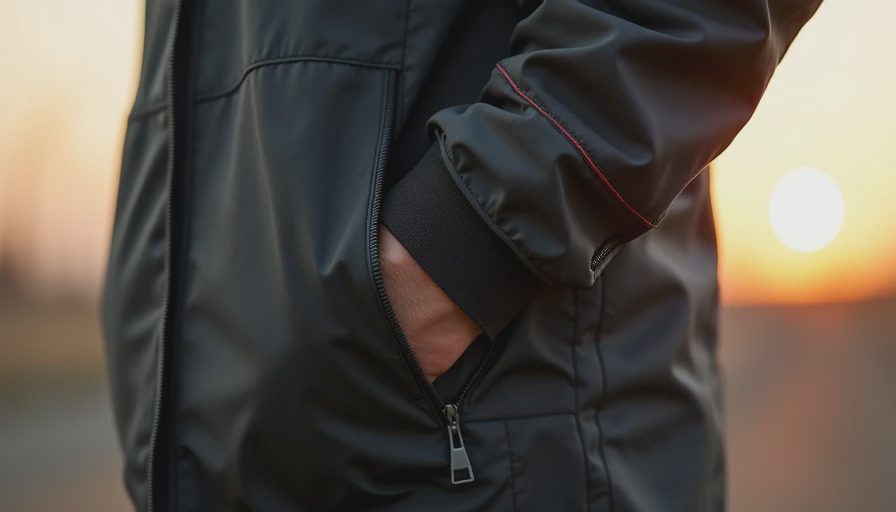
What a tailor can realistically fix
A tailor can usually shorten sleeves, adjust the center-back seam, move buttons slightly, and reduce excess fabric at the waist. Sleeve alterations often cost about $20 to $45, while basic waist adjustments commonly fall between $30 and $70. Prices depend on the garment and your location, but these are reasonable numbers to use when deciding whether an alteration makes sense.
A tailor cannot reliably add three inches to the shoulders or create a completely new armhole. Before buying, ask whether there is enough extra fabric inside the seams. Also inspect the lining, because a jacket with a complex lining or working sleeve buttons costs more to alter.
If the shoulders fit and the jacket moves well with the front open, tailoring is usually worth considering. If the shoulders pinch, the armholes cut into you, and the back pulls in several directions, return it. No alteration can turn the wrong pattern into your jacket.
A practical buying plan
Start with the activity. For office wear, test sitting at a desk and reaching for a keyboard. For driving, sit in the driver’s seat and move your hands around the wheel. For weekend use, wear the hoodie or sweater you actually plan to layer underneath. A jacket that fits over a thin shirt may fail over a flannel.
Choose the shoulder fit first, then evaluate chest room. After that, check sleeve and body length. Ignore a little extra fabric at the waist if a tailor can clean it up. Do not ignore pulling at the shoulders simply because the color is excellent. I have watched men forgive a bad shoulder because a navy jacket looked good under store lighting. Two weeks later, the jacket was living on a chair.
When comparing two jackets, walk in both for several minutes. The one that lets your arms swing naturally will look better because your body will not be fighting it. That is the simplest answer when a men's jacket changes walk: find the garment that allows your normal movement instead of asking your body to adapt.
Final fit check before you buy
A good jacket should let you stand, sit, reach, and walk without constant adjustment. The collar should stay near your neck, the shoulder seams should sit at the shoulder points, and the front should close without strain. Your stride should remain your stride.
If you already own a jacket that causes trouble, try it with the intended base layer and repeat the movement test. Mark the specific issue rather than vaguely deciding that you dislike the coat. A sleeve adjustment is inexpensive. A bad shoulder is usually a return.
You do not need ten jackets to look put together. You need one or two that fit your actual body and your actual day, whether that day includes a meeting, a school pickup, or pizza dough on your hands. Fit first. The rest is noise.

No letters yet — pray write the first.